Home
Welcome to the WavePiston Passive Control (WAPPAC) competition documentation.
Latest News
The WAPPAC competition has now concluded! 🌊
We would like to thank all participants for their interest and contributions!
The WAPPAC simulation platform remains available to the research community.
Important
The WAPPAC simulation platform can be downloaded through its dedicated Zenodo repository and cited as:
E. M. Gelos, C. Fitzgerald, C. A. Barry, J. Ringwood, Wavepiston Passive Control (WAPPAC) Simulation Platform, Zenodo, Mar. 18, 2026. https://doi.org/10.5281/zenodo.19099045.Access to the WAPPAC simulation platform can also be granted by completing the following registration form.
Stay tuned for the dissemination of the competition results, which will be presented in an upcoming dedicated conference session.
WAPPAC Competition
The WavePiston Passive Control (WAPPAC) competition is an open challenge offered to the wave energy and control community. Participants are invited to develop passive control strategies for the novel WavePiston wave energy converter (WEC). The goal is to maximize captured energy while respecting WavePiston physical constraints, with particular attention to the PTO passivity constraint.
Through this initiative, WAPPAC competition aims to foster innovation and advance the state of the art in wave energy control. The WAPPAC competition results will be announced and disseminated through a dedicated session at an international conference.
This competition is hosted by the Centre for Ocean Energy Research (COER), Maynooth University, framed within Seawater HYdraulic (SHY) PTO project funded by the European Union (EU) under Horizon funding (Grant Agreement No. 101147456 - SHY).
Learn more about COER work: coer.maynoothuniversity.ie

WavePiston Device
WavePiston is a Danish developer of innovative wave energy technology designed to harness the power of ocean waves. The modular system captures energy through a series of sails and power take-off (PTO) units mounted along a submerged pipe or string (see Figure 1). Each sail oscillates in response to the surge motion of incoming waves, and its horizontal movement relative to the string drives the hydraulic PTO units, converting the wave-induced motion into usable energy.
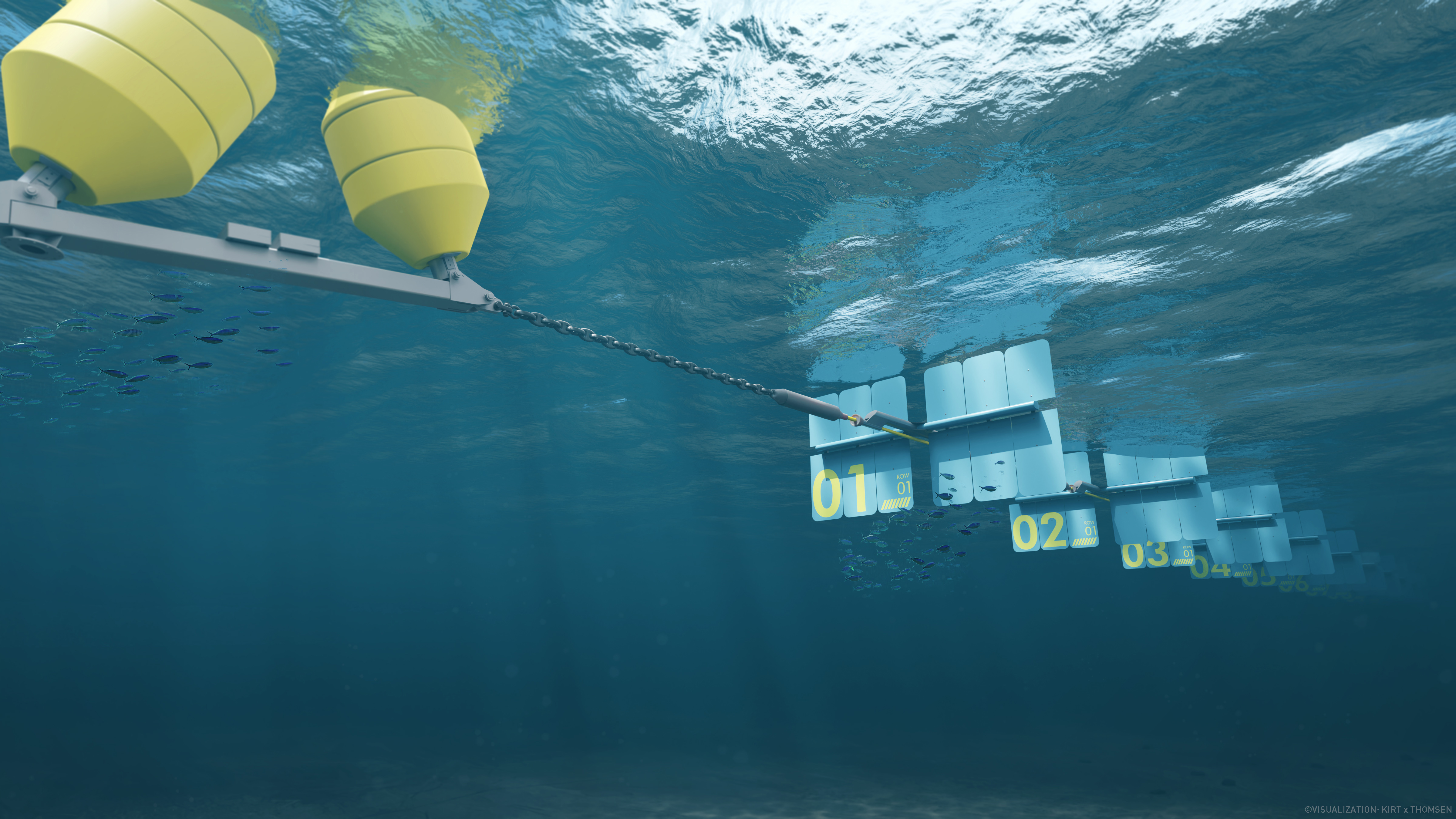
Figure 1 Illustration of Wavepiston WEC system, comprising a string of energy collectors. Image courtesy of Wavepiston.
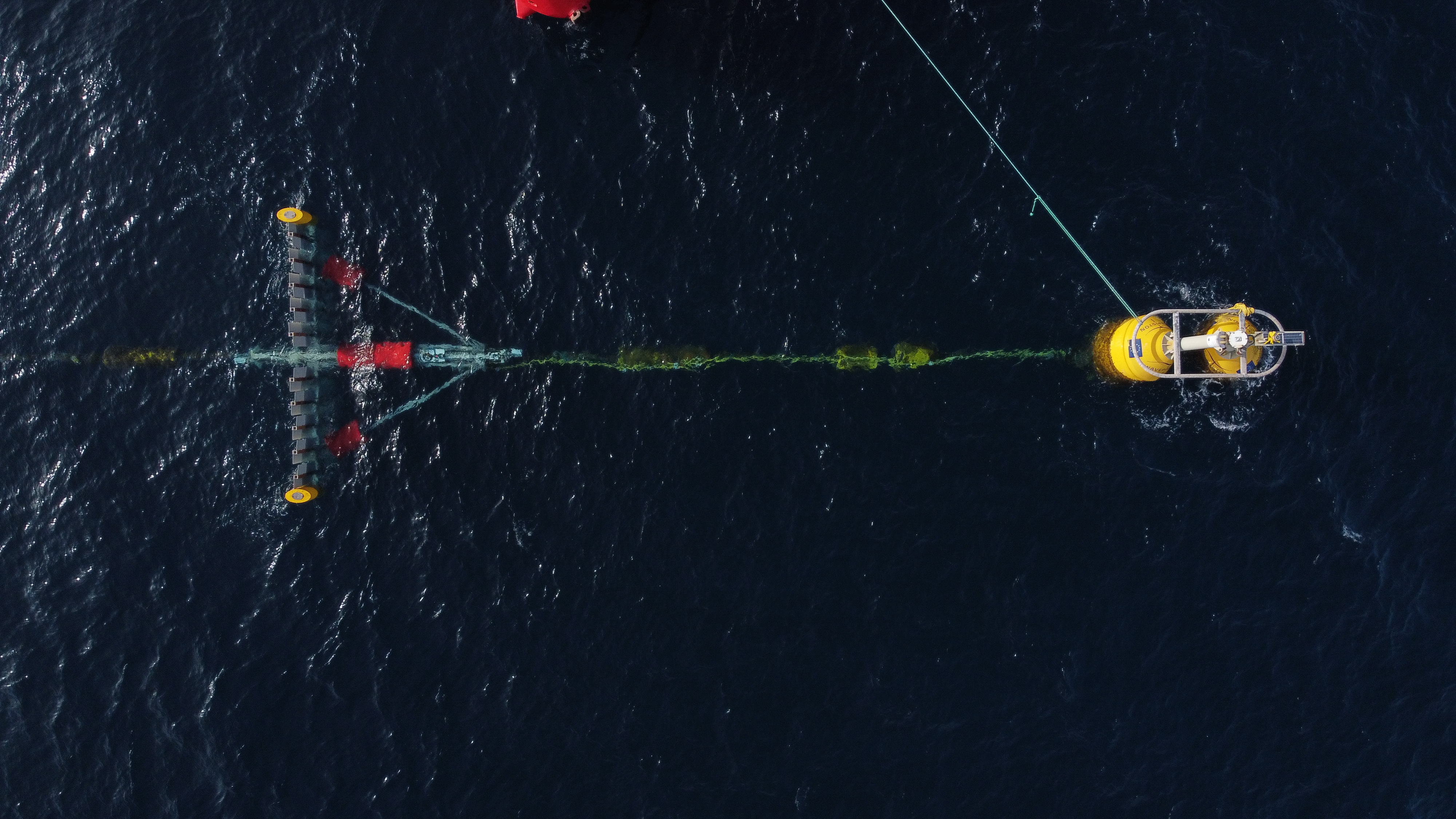
Figure 2 Top-view from the first energy collector installed on the Wavepiston string at the PLOCAN test site, Gran Canaria. Image courtesy of Wavepiston.
EU Horizon SHY Project
The SHY project, as part of EU open science policy (Horizon funding Grant Agreement No. 101147456 - SHY), aims to reduce the levelized cost of energy (LCoE) of the WavePiston device, while ensuring environmental sustainability, through the development of key components for a seawater-based hydraulic PTO system and the advancement of passive control strategies for wave energy converters.
WavePiston – Technology developer and system integrator.
COER – Responsible for control strategy development and various other research.
Key partners – Technical University of Denmark, FibronPipe, Leser, Julia F. Chozas Consultancy, Applied Renewables Research, Marine Systems Modelling, and PLOCAN.